

Polling vs Streaming: Data Updates in Real-Time Systems
When to use which?

Introduction
In today's apps, especially ones that need live updates like monitoring systems, financial tickers, or chat apps, it's important to handle data flow between servers and clients well.
The two main ways to do this are polling and streaming.
Polling
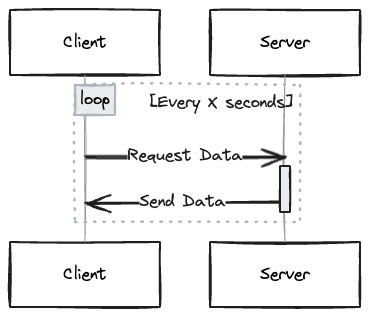
Polling is a technique where the client periodically requests data from the server at set intervals. This method is straightforward and easy to implement but comes with trade-offs regarding resource usage and real-time efficiency.
How It Works
Request Cycle: The client sends a request to the server asking for the latest data.
Server Response: The server processes the request and sends back the data.
Wait: The client waits for a predefined interval before sending another request.
Diagram
When to Use Polling
Low-Frequency Updates: Best for when data doesn't change often and keeping a constant connection isn't worth it.
Simplicity: Good for apps that value simplicity and want to use minimal server resources.
Streaming
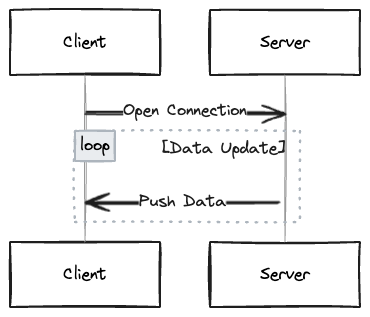
Streaming allows for an open, long-lived connection between the client and the server. With this approach, the server can "push" updates to the client in real-time as soon as new data is available, eliminating the need for repeated requests.
How It Works
Open Connection: The client starts a connection with the server, usually using WebSockets, making a persistent link.
Data Push: Whenever new data is available, the server immediately sends updates to the client without waiting for a request.
Continuous Updates: The client receives data as soon as it's available, ensuring real-time updates.
Diagram
When to Use Streaming
Real-Time Applications: Important for situations where instant updates are needed, like chat apps or live stock trading sites.
High-Frequency Updates: Ideal for places where information changes quickly and all the time.
Choosing Between Polling and Streaming
Choosing between polling and streaming for your app depends on a few things:
Data Update Frequency: Use streaming for data that changes often, and polling for data that doesn't change much.
Resource Constraints: Polling is easier to set up but can waste resources if updates are frequent. Streaming is harder to set up but is better for saving resources in real-time situations.
Application Requirements: What your app does and how quickly it needs data updates will greatly affect your decision.
About the author
Just a guy who loves to write code and watch anime.
Comments
Join the discussionNice blog brother 🙌🙌
one question In Streaming when ever the server gets new data it push to client so
- n numbers of client remain connencted to one server
- if the n numbers is to large then how can we solve this problem ?


